For Healthcare Providers and Clinicians -
Securely refer a Client for TMS - in under 2 minutes.
Refer for a TMS consultation without disrupting the patient’s established care.
Mental Edge coordinates screening, benefits review, authorization support, and treatment planning—and communicates with the care team with patient consent.
📎 Records are helpful, but not required to begin.
⏱ Referral acknowledgement in as little as 1 business day
Questions? Consult provider resources below or Email us at TMS@mentaledgecounseling.com
WHEN TO CONSIDER TMS THERAPY:
✔
Persistent depression or OCD symptoms
Symptoms remain clinically significant despite an established treatment plan.
✔
Interested in a non-drug treatment option
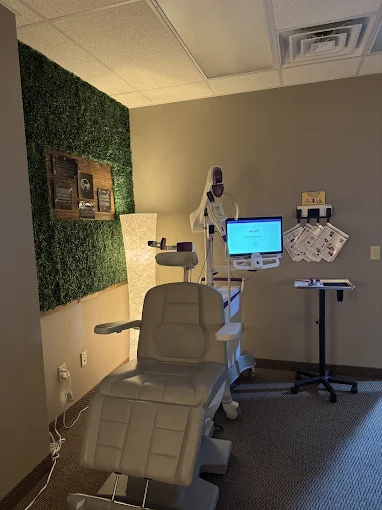
TMS is delivered in-office and is non-invasive, medication free, and has no recovery time.
✔
Medication has not provided adequate relief
The patient has had limited benefit, poor tolerability, or other barriers to medication treatment.
✔
Seeking a trusted company with proven equipment
Using the trusted Neurostar platform, Mental Edge continues 10+ years in service to Dover.
ONE REFERRAL. THREE SIMPLE STEPS.

01 // Review & Confirmation
After submission, a member from the TMS team reviews the referral for preliminary screening and gets back to the referring professional.
02 // Patient Contact
We contact the patient, gather medication records (if not provided), review benefits, support authorization, and schedule the clinical evaluation.

03 // Stay Connected
With appropriate consent, the referring professional receives meaningful status, progress, and transition updates. One referral, one team.
LOCAL TRUST. SPECIALIZED TMS SUPPORT
Since 2015…
Mental Edge has been an established & trusted behavioral-health presence in the Dover community.



On-Site Care Team
A TMS technician supports the patient throughout each session, with a qualified provider available whenever treatment is delivered.
In-House Benefits & Authorization Support
Our team reviews insurance benefits, authorization requirements, and submits claims for each client - including appeals.
NeuroStar TMS
We use NeuroStar® TMS technology within a patient-centered experience and coordinated with the referring provider.
What Our Clients are Saying:
-
![]()
I have lived for more than 30 years with the constant burden of clinical depression. Drugs help, but they have never been as effective for me as for others. TMS reduced my depression at least as effectively as multiple medications and can be used at the same time. The reduction in symptoms is long-term after treatment ends, and for some patients it is permanent.
For the first time in over two decades I have hope I can actually get better, and may even reach a point of not requiring medication to function. Highly recommend, both the business and the treatment.
~ Richard, Mental Edge TMS Client
-
![]()
I recently have complete their newest offering of NeuroStar TMS treatment. A non-invasive treatment used to treat depression symptoms. I will be the first to say, it works. From where I was when I started to today my last initial session (36 total) is almost night and day. The entire TMS team at Mental Edge are supportive, educated, fun, and overall genuine in helping those who are interested. From Matt and Hunter doing the initial intake, Hunter doing some sessions of treatment, and eventually Doug and Bridgette doing the sessions, the atmosphere was great. Completely laid back, no anxiousness at all. With their assistance and the work of my own self, the “new old” me is thrilled to be back.
I highly recommend this treatment for anyone who is suffering from depressive symptoms. Great team even more amazing and caring personalities.
~ Matt, Mental Edge TMS Client
-
![]()
I just completed TMS therapy at Mental Edge Counseling. TheTMS therapy time commitment it required was so worth it! This therapy has helped my Depression symptoms more than any other therapy! Quick appointments and the staff are all amazing. They are kind and knowledgeable.
All the staff were flexible and put me at ease whenever I had questions about the TMS process. I recommend Mental Edge Counseling for your mental health needs.~ Beth, Mental Edge TMS Client
-
![]()
I recently finished the TMS treatment program, and it's honestly made a difference for me. At first it's uncomfortable, yeah, but once you get used to it the session's just another part of your routine. Everyone involved in the program is great, they're all very understanding and supportive. The big thing for me is the change in my depression and anxiety, which I'll describe a bit further down. It's not a cure. Nothing will completely erase what you're going through. But it can help make things a lot easier moving forward, and that's the important part. If you're considering, it's worth giving a shot in my opinion.
Everything in general has gotten lighter and brighter. Easier to carry, easier to see. Bad days aren't large, dark, thundering storms covering the sky and drowning out any light or warmth. Now the clouds are a lighter medium gray, the day feels a bit cold but not freezing, the lights are dull and washed but still clearly there.
Anxiety isn't a constant balloon in my chest that's stretched too big and still too tight and flattens my lungs and heart. It's a solid rock that's heavy in my chest, but staying in a spot that doesn't hurt to breathe, and crumbles apart by itself much easier and faster than before.
It's helped more than I expected. And I'm so grateful to the people who made it happen. And if you do the treatments, I hope it can help you too.
~ Tatjana -
![]()
I have had the remarkable opportunity to receive TMS treatment here, and it has been life changing. My provider explained the process clearly, made each session comfortable, and monitored my progress closely. His knowledge and practical strategies helped me manage anxiety and depression in ways I had not been able to before. The procedure itself has changed the way I perceive and react to obstacles in my life, and for the first time in a long time, I feel genuine joy, hope and see a path forward again.
Overall, the providers and staff at Mental Edge Counseling create an environment where you feel supported every step of the way. It has been an exceptional experience and I highly recommend Mental Edge Counseling.~Alice, Mental Edge TMS Client





Frequently Asked Questions
-
⤷ Yes! Most major insurance providers cover TMS when medical criteria are met. Our team handles all benefit checks, authorizations, and required documentation on the client’s behalf.
-
Major Depressive Disorder diagnosis (F32.2 or F33.2)
Supporting information of said diagnosis (PHQ9 scores, clinical notes, etc)
least 3 failed medication trials of 2 or more antidepressant classifications
*As long as the provider or client provides a complete medication record, the Mental Edge care team can normally gather enough information in the TMS Intake session to submit for insurance authorization.
-
⤷ The client’s medication record will be required in order to complete our benefits investigation. Other documents supporting a Major Depressive Disorder diagnosis, such as clinical notes, are helpful but not required.
-
⤷ TMS uses focused magnetic pulses (similar in strength to an MRI), to revitalize underactive areas of the brain involved in regulating mood. When these regions are underactive, depression / OCD can result. “Waking up” these regions can have a lasting effect on depression, making long-term remission from depression / OCD a reality for many people.
-
⤷ Most people describe TMS as a light tapping sensation on the scalp. Some may feel mild discomfort during the first few sessions, but this typically fades within the first week as your body adjusts.
-
⤷ Yes. Most patients stay on their current medications throughout treatment unless advised otherwise by their prescribing provider. TMS can be used alone or alongside medication.
-
⤷ A typical treatment plan includes 36 sessions (3-5x / week) that each last between 19-37 minutes. Completing the full treatment with as many consecutive sessions as possible is essential for lasting efficacy.
-
Most clients who have completed treatment as prescribed report lasting effects. Some clients return for “tune-ups” or full re-treatment to compound effects.
-
⤷ Yes! There are many research trials & studies conducted in order to test TMS’s safety & efficacy.Here are a few of our favorite:
Carpenter LL, et al. (2012). Transcranial Magnetic Stimulation (TMS) for Major Depression: A Multisite, Naturalistic, Observational Study of Acute Treatment Outcomes in Clinical Practice. Depression and Anxiety, 29(7):587-596. www.ncbi.nlm.nih.gov/pubmed/22689344
George MS, et al. (2010). Daily Left Prefrontal Transcranial Magnetic Stimulation Therapy for Major Depressive Disorder: A Sham-Controlled Randomized Trial. Arch Gen Psychiatry, 67(5):507-516. www.ncbi.nlm.nih.gov/pubmed/20439832
Dunner DL, et al. (2014). A Multisite, Naturalistic, Observational Study of Transcranial Magnetic Stimulation (TMS) for Patients with Pharmacoresistant Major Depressive Disorder: Durability of Benefit Over a 1-Year Follow-Up Period. J Clin Psychiatry. 75(12):1394-1401. www.ncbi.nlm.nih.gov/pubmed/25271871
O’Reardon JP, et al. (2007). Efficacy and Safety of Transcranial Magnetic Stimulation in the Acute Treatment of Major Depression: A Multisite Randomized Controlled Trial. Biol Psychiatry, 62(11):1208-1216. www.ncbi.nlm.nih.gov/pubmed/17573044